Frequently Asked Questions About Skunk Removal
What signs indicate I have a skunk on my property?
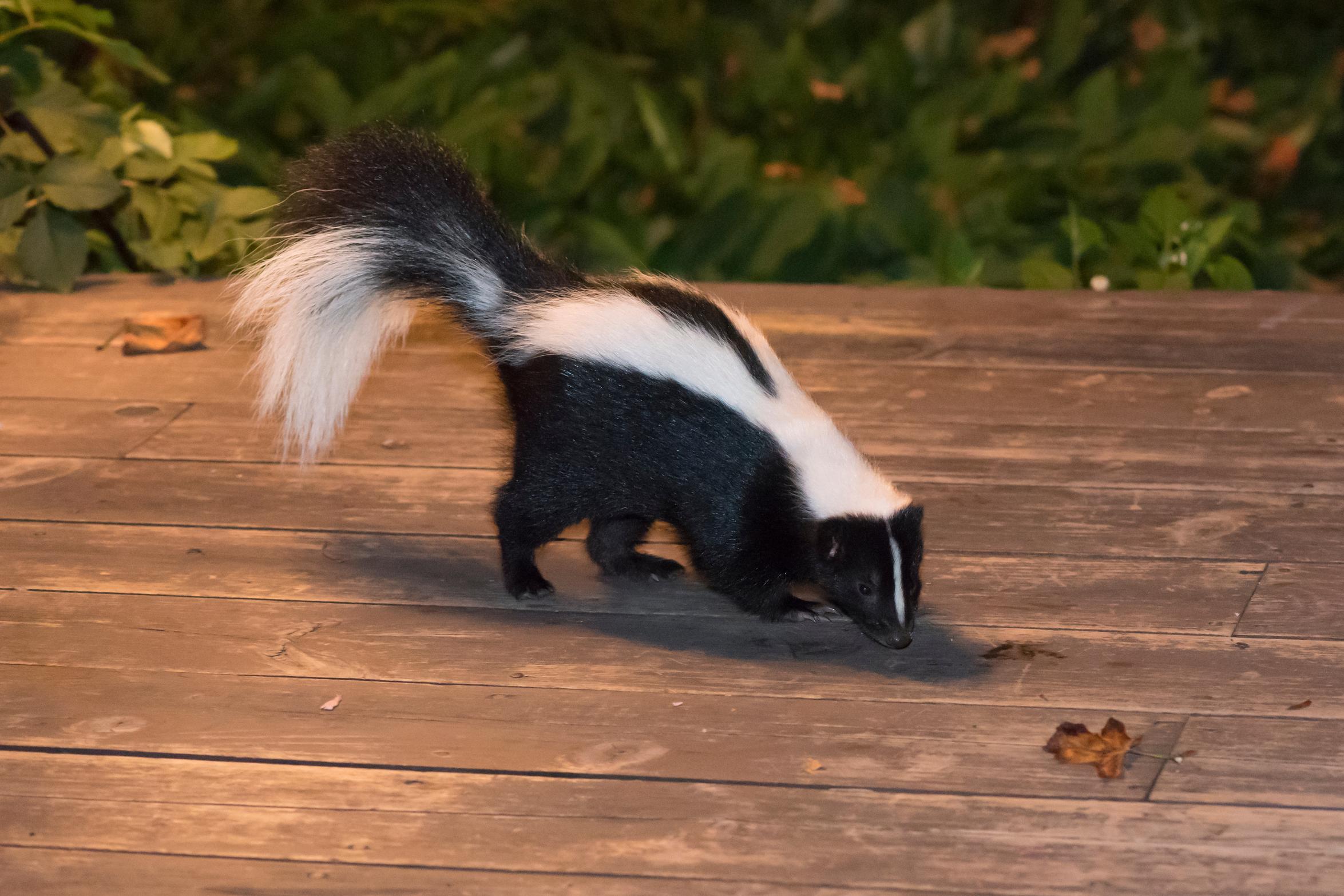
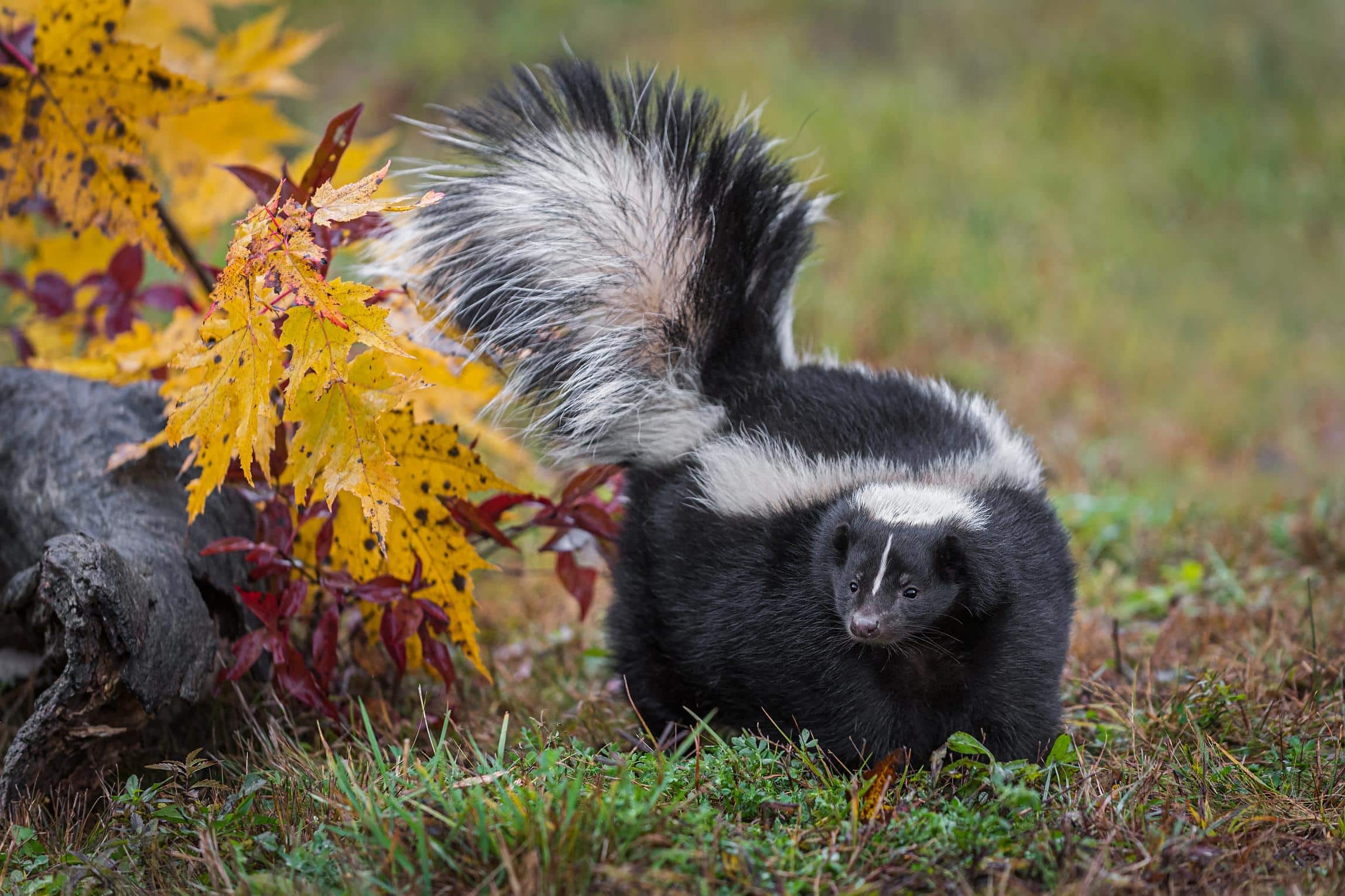
Common signs include a strong musky odor, tracks showing four toes and a long stride, overturned garbage or pet food dishes, digging in lawns or under decks, and hearing nocturnal rustling or vocalizations. You may also see a skunk crossing yards at dawn or dusk.
Are skunks dangerous to people or pets?
Skunks can carry diseases such as rabies and their spray can cause irritation and temporary vision problems. They are typically non-aggressive but will spray when threatened. Keep a safe distance and keep pets supervised or restrained until the animal is removed and any exposure is evaluated by a veterinarian.
How do you remove skunks from my property?
We conduct a site inspection to identify entry points, attractants, and any den sites. All removals and exclusions are performed in accordance with State and Federal law. Depending on the situation, we may perform live removal, exclusion (sealing entry and installing one-way devices where permitted), and follow-up monitoring to ensure the area is clear.
Can you remove skunks from under a porch, shed, or deck?
Yes. We assess the structure, safely access the area if possible, and employ appropriate removal and exclusion techniques. If a den is present, we will follow legal protocols to remove the animal and then secure access points to prevent re-entry.
What should I do if a skunk has sprayed my home or pet?
For pets, keep them outside of the house until treated; consult a veterinarian for eye or skin irritation and for rabies evaluation if there was a bite. For buildings, ventilate the area and avoid using water alone. We can recommend odor-removal products and professional cleaning methods to reduce lingering smell and neutralize residue.
How quickly can you respond to a skunk problem?
Response times vary by availability and urgency. We prioritize situations involving confinement, repeated spraying, or potential disease exposure and can often provide same-day or next-day service. Contact us to schedule an inspection.
Will a female skunk leave her young if removed?
Female skunks may have litters in spring and early summer. We follow legal guidelines to avoid separating dependent young in ways that would cause harm. If young are present, we evaluate and act according to State and Federal regulations to ensure proper handling and safety.
How do you prevent skunks from returning?
Prevention includes eliminating food sources (securing garbage, pet food, and compost), sealing access points around foundations, repairing gaps under decks and sheds, and removing attractive denning materials. We provide targeted exclusion work and recommendations to reduce future activity.
Are skunks nocturnal and will I see them during the day?
Skunks are primarily nocturnal, active at dusk and night. Daytime activity can occur if a den has been disturbed, if food is scarce, or if an animal is ill. Daytime sightings should be treated with caution and reported for prompt evaluation.
Do skunks climb or dig burrows?
Skunks are capable diggers and will use existing burrows created by other animals or dig under structures. They are not strong climbers compared with raccoons but can climb low fences or access raised decks. We inspect for these vulnerabilities during our assessments.
Can skunks transmit diseases to my pets or family?
Skunks can carry rabies and parasites like fleas and ticks that may affect pets and people. Avoid direct contact, keep pets vaccinated, and contact us or local health authorities if you suspect an exposure so appropriate testing and medical steps can be taken.
What should I expect during the inspection and removal process?
A technician will survey the property, look for signs and entry points, discuss options with you, and outline the recommended course of action. If removal is needed, we will execute the plan, secure the site, and provide follow-up steps and preventive recommendations. All actions comply with State and Federal law.
Do you provide cleanup after skunk removal?
Yes. We offer options for odor mitigation, decontamination of affected areas, and advice or services for cleaning nesting sites to reduce attractants and health risks. Specific cleanup steps will be discussed after the removal is completed.
How can I reduce the risk of future skunk problems?
Regularly secure trash and pet food, seal foundation gaps and crawlspace openings, maintain yards to reduce hiding spots, and inspect for weak areas around decks and sheds. We can create a tailored exclusion and prevention plan for your property.